The Globe and Mail
- 4.2
- Rating
- 500.00K
- Installs
- Free
- Price

 Analysis by App-foxy
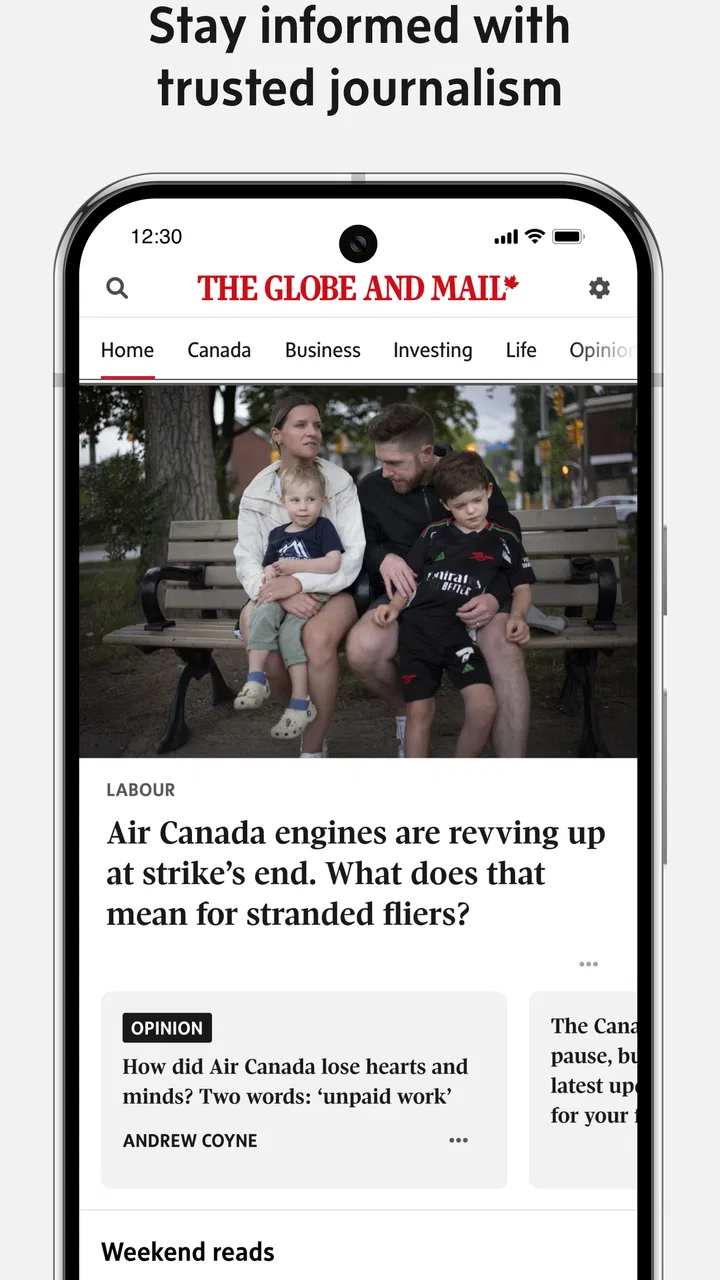
I often reach for a news app when I have a few spare minutes but want more than a stream of disconnected headlines. In that situation, The Globe and Mail feels built for readers who want Canadian news with commentary and analysis in the same place. I reviewed it as a daily reading tool rather than as something to open once and forget, paying attention to how it fits into a normal routine: finding a useful story, reading beyond the headline, passing an article to someone else, and deciding whether it deserves a return visit.
The app is free to install, carries an Everyone age rating, and comes from The Globe and Mail Inc. It belongs to the News & Magazines category, and its presence on Android is long established, with a release history reaching back to January 2012. The current version is 11.0 and requires Android 7.0 or later. Those details matter because this is not a new experiment trying to imitate a newspaper; it is the mobile expression of a familiar Canadian publication.
How a normal reading session unfolds
I find the app easiest to judge by following one ordinary visit from opening it to deciding what to read next. I look for how quickly I can move from a general interest in Canadian news to a story worth my attention, without mistaking a brisk scan for a full understanding. That everyday rhythm also makes it easier to weigh the app’s pace against the steadier concentration its analysis can require.
You May Also Like

 Blood Strike: 2.5 Anniversary
Blood Strike’s Loadouts Turn Every Drop Into a Tactical Gamble
A close look at Blood Strike’s custom loadouts: how fast access to signature weapons reshapes its battle royale rhythm, rewards preparation, and narrows the gap between fights.

 Pandora - Music & Podcasts
Pandora’s Music Is Easy to Start, but Harder to Recover
Pandora’s strength is its low-effort path from a seed to a station. Its weak spot is how much confidence it asks you to place in connection, setup, and quiet recovery.

 8 Ball Pool
 Is Built on Rivalries, Rematches, and Routine
A close look at the rivalries, rematches, shared routines, and unanswered safety questions that turn a quick pool match into a persistent mobile community.

 Samsung Music
’s Quiet Strength Is Playing What You Already Own
Its reach comes less from spectacle than from dependable access to a personal library. That simplicity is both the app’s strongest retention engine and its ceiling.

 AccuWeather: Weather Radar
AccuWeather Review: A Quick, Clear Forecast for Everyday Decisions
For everyday plans, the best forecast is the one you can understand quickly. AccuWeather makes rain timing, radar, and local conditions easy to act on, with a few trade-offs.

 Hill Climb Racing
Why Hill Climb Racing Still Turns Crashes Into One More Run
A tiny car, a bumpy hill and one more upgrade: Hill Climb Racing keeps resurfacing because its simple chaos makes every near-miss feel personal.
More From Our News Desk



Starting with a specific need instead of endless scrolling
My most useful sessions began with a clear reason to open the app. I might want to understand a national story, catch up on business news, or read an opinion piece that gives an event more context. That starting point changes the experience. If I arrive with a question, the app works as a focused doorway into the publication. If I open it without a plan, it can become another headline feed competing for attention with every other app on my phone.
The Globe and Mail is strongest when I treat it as a publication with an editorial point of view, not as a neutral collection of every story happening everywhere. Its emphasis on Canadian news, commentary, and analysis gives the reading experience a recognizable centre. That is helpful for someone who wants domestic coverage to be a regular part of the day, especially when general-purpose news aggregators bury Canadian stories beneath international updates and viral topics.
I also found that the app makes more sense as part of a short routine than as a replacement for every source of information. I would begin by scanning the main selection, pause at a headline that matched my reason for opening it, and then decide whether I wanted a quick update or a deeper read. That small decision prevents the session from turning into passive swiping.
Moving from headline to understanding
The important handoff is from discovery to reading. A headline may tell me what happened, but commentary and analysis help answer why it matters. The app’s value is therefore not only in delivering fresh items; it is in giving the publication’s reporting and interpretation a shared mobile home. I would use a brief news check to identify the subject, then spend more time with the article that offered the clearest explanation.
This is where it differs from a typical aggregator. An aggregator is convenient when I want breadth, multiple outlets, or a fast comparison of headlines. The Globe and Mail is more suitable when I want a consistent editorial destination and am willing to follow a story through that lens. Neither approach is automatically better. The choice depends on whether my priority is maximum variety or a more coherent reading relationship with one Canadian news source.
A practical habit is to separate “need to know” from “want to understand.” I can skim the first group during a commute or between tasks, then return to the second when I have enough attention for analysis. That workflow keeps the app useful without pretending every article deserves the same amount of time.
Using the app during an ordinary day
Imagine a weekday morning when I have ten minutes before leaving home. I open the app to check the national picture, read one article that affects the conversation at work, and close it before the morning becomes a full reading session. Later, during lunch, I return to the subject that caught my attention and choose a longer analysis. By the evening, I may share the article with a friend who has only seen the headline elsewhere.
That scenario shows the app’s practical strength: it can support several small handoffs across a day. The first handoff is from a notification or remembered topic to an article. The second is from quick awareness to considered reading. The third is from private reading to conversation. I would not use every session in this sequence, but thinking in these stages makes the app less distracting and more purposeful.
It is also a better fit for readers who enjoy returning to a publication’s style. The consistent identity can make it easier to build a habit than a constantly changing collection of sources. On the other hand, readers who dislike editorial framing or want a broad international mix may feel constrained compared with a multi-source news reader.
What happens when an article leaves the app
News rarely ends when I finish reading. I may need to explain it to a colleague, send it to a family group, or save the idea mentally for a later discussion. The Globe and Mail works well in that handoff when the recipient already values detailed Canadian coverage. The article has a clear origin, which is more useful than forwarding a headline with no context from an anonymous feed.
Still, sharing can expose a difference between the reader’s expectations and the publication’s model. The app is free to download, but individual content access can involve in-app purchases priced at $5.99 per item. I therefore would not assume that installing the app means every article is available without a payment step. Before sending a story to someone, I would tell them where it came from and be prepared for the possibility that their reading experience differs from mine.
That is an important everyday trade-off. Free installation lowers the barrier to trying the app, while paid access can interrupt the simple “tap and read” flow. For a reader who only occasionally wants a Globe and Mail article, that friction may be acceptable. For someone building a daily habit, it is worth considering the cost of access alongside the convenience of having the publication on a phone.
What the reader gets at the end of the workflow
The best outcome is not merely that I have consumed another headline. It is that I can describe the issue more clearly, recognize the difference between reporting and opinion, or bring a better-informed point to a conversation. The app is especially useful when I want a Canadian perspective that combines current events with interpretation rather than leaving me to assemble context from several unrelated sources.
Its average rating is 4.2 from around 11 thousand ratings, and the app has passed 500 thousand installs. I read those figures as signs of a reasonably established audience, not as proof that it will suit every reader. The rating suggests broad approval, while the scale of adoption indicates that the app has found a place on many Android phones. My own recommendation is narrower: it is a good candidate for people who already know they want this publication’s approach to news.
The app’s free price is useful for testing the reading experience before committing to a routine. I would install it, read the freely accessible material, and pay attention to how often the app takes me from a headline to something genuinely useful. If that transition happens regularly, the purchase model becomes easier to justify. If I only open it when a story is mentioned elsewhere, a general news reader may be more practical.
Where the workflow becomes less comfortable
The biggest break occurs when my need is broad discovery rather than focused reading. If I want local updates from several regions, international coverage from many publishers, or a quick side-by-side view of competing headlines, this app is not the most efficient first stop. I would choose an aggregator in that situation and use The Globe and Mail afterward when one of its stories offers the depth I need.
Another break is the gap between curiosity and payment. A reader can be interested enough to open an article but not interested enough to pay for each piece. The $5.99 in-app purchase price makes that decision concrete. It is not a hidden detail I would ignore when recommending the app to a friend, particularly a friend who expects a free news feed simply because the installation costs nothing.
There is also a personal attention issue. Commentary and analysis reward concentration, but they are not always what I need when I have thirty seconds. If I am checking one fact before a meeting, I prefer a faster source. The app becomes more valuable when I can give an article enough time to explain itself. That makes it less ideal for people who mainly want short alerts and no editorial interpretation.
Readers should also think about viewpoint diversity. A single publication can provide a strong, recognizable experience, but it should not be the only place I look when a subject is controversial or personally important. I would use it as one considered source, then compare major claims with other reputable outlets when the decision at hand calls for a wider view. That is not a flaw unique to this app; it is the natural trade-off of choosing a focused publication over a mixed-source platform.
Small habits that improve the experience
My first tip is to open the app with a question. “What changed today?” produces a different session from “What can I scroll through?” The first encourages me to identify a relevant article and stop; the second invites an unfocused loop. This simple change makes the app feel more like a newspaper and less like a social feed.
My second tip is to use two passes. On the first pass, I look only for subjects that affect my work, community, or conversations. On the second, I choose one piece of analysis instead of trying to read everything. This is a better match for the publication’s strengths and helps protect time for articles that require thought.
My third tip is to explain the access model before sharing. If I send an article to a friend, I would include a short note about its source and possible purchase requirement rather than assuming the recipient will see exactly what I saw. That small courtesy avoids a frustrating handoff and makes the app more useful for group discussions.
A fourth useful habit is to keep a second source available for breadth, not because this app lacks value, but because its focused identity is precisely what makes it distinctive. I would use a broad reader to discover what deserves attention, then turn here when I want Canadian reporting, commentary, or analysis in a consistent environment. That division of labour is more realistic than asking one app to cover every information need.
Who should install it, and who should skip it
I would recommend The Globe and Mail to a reader who follows Canadian affairs, appreciates analysis, and prefers returning to a known publication rather than sorting through an anonymous headline mix. It also suits someone who wants a serious reading option for short daily sessions and longer weekend catch-ups. The Everyone rating makes it approachable for a general audience, while the long-running Android presence suggests it is not a trial built around a temporary news cycle.
I would hesitate to recommend it to someone who wants only free, rapid-fire headlines, a highly personalized multi-source feed, or a strong emphasis on international coverage from many publishers. That reader may be happier with an aggregator or a broadcaster’s app. I would also warn anyone with a strict no-purchase rule that the free download does not remove the possibility of paid article access.
For iPhone users, the publication may still be familiar as a brand, but this review focuses on the Android app experience. Android readers on version 7.0 or newer can consider it without needing a recent phone, although the quality of any news routine will still depend on whether the app’s editorial mix matches their interests.
My final reading decision
After following the full path from a morning question to a finished article and then to a possible conversation, I see The Globe and Mail as a focused news companion rather than an all-purpose information machine. It gives me a clear Canadian destination for news, commentary, and analysis, and it is most rewarding when I slow down enough to use all three.
The friction is equally clear: breadth may require another app, quick fact checks may be better served elsewhere, and paid access can interrupt sharing or casual curiosity. Those are meaningful limitations, not reasons to dismiss it. They simply define the audience. If you want a consistent Canadian news source and are willing to read with intention, this is worth trying; if you want an entirely free, endlessly broad headline feed, choose a different tool.
For my own routine, I would keep it as a deliberate stop in the day: open with a purpose, read beyond the first headline, compare important issues when necessary, and share only after considering the recipient’s access. That workflow brings out the app’s real strength and prevents its weaker points from becoming surprises.
FAQs for The Globe and Mail
01What is The Globe and Mail app?
The Globe and Mail app is the mobile edition of Canada’s national newspaper, offering access to breaking news, business, politics, world affairs, opinion, sports, arts, and lifestyle coverage. Its design is optimized for Android and iOS, with articles, photographs, and other digital content presented in a format intended for convenient reading on a phone or tablet.
02Is a subscription required to read The Globe and Mail?
Many articles and features in The Globe and Mail app are available only to subscribers, although the exact access offered to non-subscribers may change over time. Users should review the current subscription options, trial terms, billing conditions, and cancellation policy before downloading or subscribing. Existing digital subscribers can generally sign in through the app.
03What features does The Globe and Mail app include?
The app typically provides access to personalized news content, saved articles, reading lists, newsletters, topic sections, and notifications for important stories. Depending on the version and subscription plan, readers may also find digital editions, audio content, puzzles, podcasts, or other subscriber features. Available tools can vary between Android and iOS releases.
04Can I read The Globe and Mail offline?
Offline reading may be available for selected content or digital-edition material, depending on the app version and the type of subscription attached to your account. It is best to open the articles or edition while connected to the internet before traveling. Some interactive elements, videos, advertisements, and newly published stories may still require an active connection.
05Is The Globe and Mail app worth downloading?
The app is a strong choice for readers who want in-depth Canadian journalism, detailed business reporting, political analysis, and professionally edited international news in one place. Its main drawback is that much of the content may require a paid subscription. Before installing, consider the subscription price, your interest in Canadian coverage, and whether the available features match your reading habits.
Pros
- Clear
- well-edited reporting with strong Canadian coverage.
- Excellent business
- politics
- and investigative journalism sections.
- Useful newsletters help readers follow specific topics.
- Clean app design makes articles comfortable to read.
- Audio content and podcasts add variety beyond written articles.
Cons
- Most premium articles require a paid subscription.
- Some features may be limited compared with the full website.
- Subscription pricing can be high for occasional readers.
- Content may feel less relevant to readers outside Canada.
- App notifications can become frequent unless carefully customized.

The Globe and Mail
Gallery